

Halloween is about more than candy and costumes. For older adults, it can be a doorway to cherished memories, laughter with friends and family, and a welcome break from routine.
Last year, we shared ideas for hosting spooky movie nights with seniors, and the response was wonderful. This year, we’re going beyond the screen. Whether you’re visiting a loved one, volunteering at a senior community, or planning a gathering at home, these activities turn Halloween into a season of real connection.
That connection matters. According to the National Institute on Aging, loneliness and social isolation in older adults are linked to health risks such as heart disease, depression, and cognitive decline. The NIA’s tips for staying connected point to shared activities and hobbies as one of the best ways to keep social ties strong. A festive holiday is the perfect excuse to start.
Take a Trip Down Costume Memory Lane
Ask almost anyone over 70 about their childhood Halloween costume, and you’ll likely get a story. Many seniors remember homemade outfits stitched from bedsheets, old curtains, or a parent’s clothes, long before store-bought costumes were common.
Turn those memories into an activity:
- Bring out old photos. Ask family members to dig up Halloween pictures from past decades and look through them together.
- Use conversation starters. Try questions like “What was your favorite costume as a kid?”, “Who made it?”, or “What did trick-or-treating look like in your neighborhood?”
- Host a “then and now” show. Have grandchildren or volunteers show off their costumes while seniors share what they wore at the same age.
- Keep costumes simple and comfortable. If a senior wants to dress up, suggest easy pieces like a festive hat, a cape, cat ears, or an orange-and-black scarf. Comfort and safety always come first.
Reminiscing like this does more than pass the time. It helps older adults feel heard and valued, and it lets younger family members learn stories they might never have known.
Decorate Together
Decorating is one of the easiest ways to bring the Halloween spirit into a senior’s home or room. The goal isn’t a haunted house. It’s a cheerful, shared project.
- Go friendly, not frightening. Pumpkins, scarecrows, autumn leaves, friendly ghosts, and black cats are festive without being unsettling. Skip jump-scare props, strobe lights, and loud sound effects, especially for anyone living with dementia.
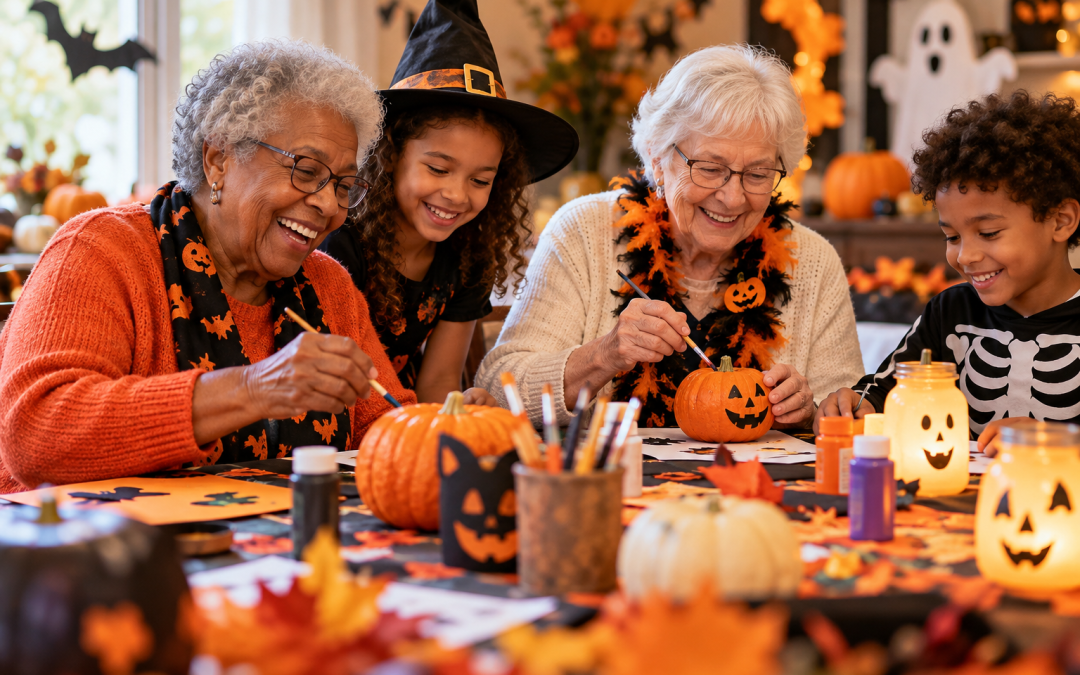
- Paint pumpkins instead of carving. Carving knives can be risky for unsteady hands. Acrylic paint, markers, stickers, or glitter glue let everyone join in safely.
- Use battery-operated candles. LED tea lights give jack-o’-lanterns a warm glow with no fire hazard.
- Keep pathways clear. Place decorations on tables, doors, and windows rather than floors, so nothing becomes a tripping hazard.
- Decorate a door or window as a team. In senior communities, residents can work together on a hallway door or window display, then take a “decoration tour” to admire everyone’s work.
Let the senior make the creative calls: where the pumpkin goes, which colors to use, how the display comes together. Being in charge of the decisions is part of what makes it meaningful.
Share Stories by Lamplight
Long before streaming services, Halloween stories were told out loud. Bring back that tradition with a storytelling hour.
- Read classic tales aloud. Washington Irving’s The Legend of Sleepy Hollow and other public-domain classics are perfect for reading in short, cozy sessions.
- Invite seniors to tell their own. Many grew up with local legends, family ghost stories, or old superstitions. Ask, “Was there a ‘haunted’ house in your town?” and watch the stories flow.
- Explore traditions from around the world. Talk about the Celtic festival of Samhain, Mexico’s Día de los Muertos, or how Halloween was celebrated in a senior’s home country. This works especially well in diverse senior communities.
- Record the stories. Use a phone to record audio or video. These recordings can become treasured keepsakes for the whole family.
- Try a group story. Start a spooky (but silly) tale with one sentence, then let each person add the next line. The results are usually hilarious.
Keep the tone light and fun. A little suspense is great, but the point is laughter and connection, not fear.
Fill the Room with Music
Music has a remarkable way of unlocking memories and lifting moods. The Alzheimer’s Association notes that music and art allow for self-expression and engagement, and that music can offer a way to connect even when conversation becomes difficult.
Ideas for a musical Halloween:
- Build a Halloween playlist from their era. Songs like “Monster Mash” (1962), “Purple People Eater” (1958), “That Old Black Magic,” and “Witchcraft” are fun favorites for many older adults.
- Host a sing-along. Print large-type lyric sheets for familiar songs and let everyone join in, no talent required.
- Play “Name That Tune.” Play the first few seconds of a spooky classic or a TV theme like The Addams Family and see who guesses first.
- Add gentle movement. Chair dancing, swaying, or tapping along with simple rhythm instruments like shakers or tambourines gets everyone involved, whatever their mobility.
- Keep the volume comfortable. Loud music can overwhelm, so start low and adjust based on how people respond.
If you can, let the senior choose the songs. The music they love most is often tied to their happiest memories.
Make Simple Halloween Crafts
Crafts give hands something to do and leave everyone with something to show for the afternoon. Choose projects with few steps, large pieces, and forgiving results.
- Pinecone or leaf art. Collect autumn leaves and pinecones on a short walk, then paint them or glue them into a wreath or centerpiece.
- Mason jar lanterns. Wrap jars in white gauze for “mummies” or paint them orange for jack-o’-lanterns, then add googly eyes and an LED tea light.
- Paper bag or plate crafts. Paper plate pumpkins, black cats, and bats are easy to cut, color, and hang.
- Halloween greeting cards. Decorate cards with stamps, stickers, and markers, then mail them to grandchildren or deliver them to neighbors. It’s a craft and a connection in one.
- Candy corn “treat cups.” Decorate small cups and fill them with treats to share with visitors or staff.
A few tips for success:
- Use large-handled brushes, chunky markers, and non-toxic glue sticks for easier gripping.
- Work at a well-lit table and pre-cut any tricky pieces ahead of time.
- Celebrate the process, not perfection. Every pumpkin is a good pumpkin.
Tips for a Comfortable, Inclusive Celebration
Every senior is different, so a little planning helps everyone enjoy the day.
- Plan for the daytime. Afternoon gatherings avoid evening fatigue and the late-day confusion some people with dementia experience.
- Keep groups small and sessions short. Thirty to sixty minutes of activity is plenty, with time for breaks.
- Mind dietary needs. Offer sugar-free treats, soft snacks, and options that fit any medical diets.
- Watch for overstimulation. If someone seems anxious or tired, offer a quiet space or switch to a calmer activity.
- Include everyone. Adapt activities for limited mobility, hearing, or vision, such as seated options, large print, and good lighting.
- Invite multiple generations. Grandchildren, neighbors, and volunteers bring fresh energy, and seniors love sharing the holiday with young people.
Make This Halloween One to Remember
The most meaningful Halloween moments rarely come from the scariest costume or the biggest bag of candy. They come from time spent together: a story told for the first time, a song sung off-key with friends, a painted pumpkin proudly placed on a windowsill.
Pair these activities with a spooky movie night for a full season of fun, and remember that a simple visit can mean the world to an older adult this time of year.
How do you celebrate Halloween with the seniors in your life? Share your favorite ideas with the Holiday Project community. We’d love to hear them.